Fall Market is Here! Call or text me at 705-879-8200 for your FREE, no-obligation opinion of value.

Fall Market is Here! Call or text me at 705-879-8200 for your FREE, no-obligation opinion of value.
By: Jason Richard — Kawartha Lakes Waterfront Realtor
The last five years of the Kawartha Lakes waterfront market have been unlike anything I’ve seen in this business. Prices surged, then froze, then reset… and now we’re heading into a new phase that most people aren’t talking about yet.
If you own a cottage or are thinking about buying one, it’s worth understanding not just what happened, but why it happened — because the “why” tells us a lot about what comes next.
From my seat helping buyers, sellers, and investors through this cycle, here’s how it actually unfolded.
When COVID hit, the cottage market went from a quiet, seasonal niche to the center of attention overnight.
Travel shut down, interest rates dropped to 0.25%, and equity in the cities took off. A few buyer types led the charge:
Early retirees looking to move up their lifestyle plans
Families wanting a place to escape to
STR/Airbnb operators chasing yield
Local buyers upgrading to better frontage
It wasn’t remote work alone — the real fuel was wealth, retirement, and STR income potential.
On the numbers side, the market moved fast:
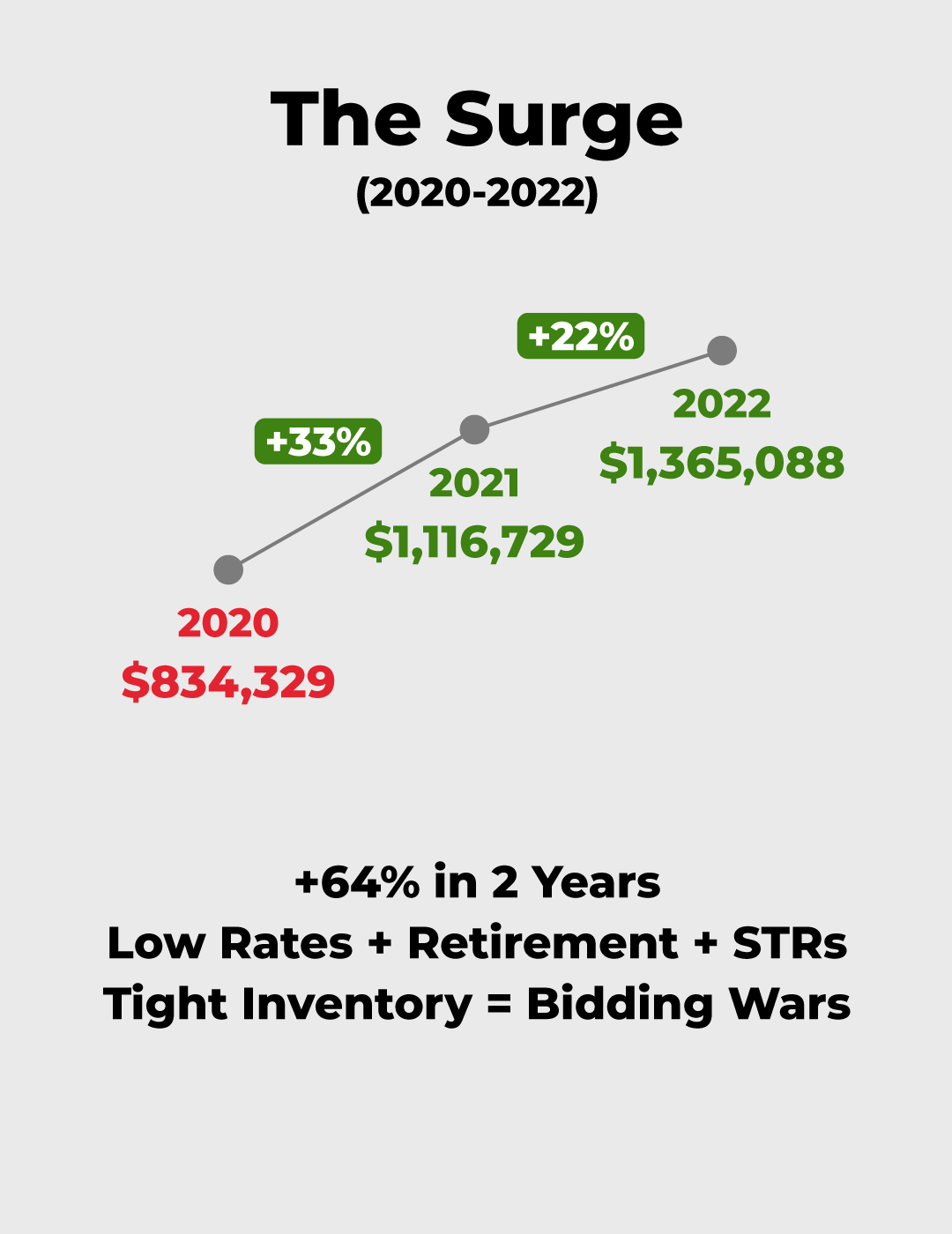
2020: Avg sale price ~$834K
2021: Avg sale price ~$1.11M
2022: Avg sale price ~$1.36M
That’s about a 64% jump in two years. Days on market collapsed, bidding wars became normal, and anything with usable frontage moved.
By 2023, interest rates had climbed fast. In a normal market that would trigger forced selling or at least a wave of listings — but that didn’t happen here.
Why? Two reasons:
(1) Most owners were on 5-year fixed mortgages
Payments didn’t change, so there was no reason to panic sell.
(2) STR demand was still strong
If you were renting your cottage, the summer cashflow carried the property just fine.
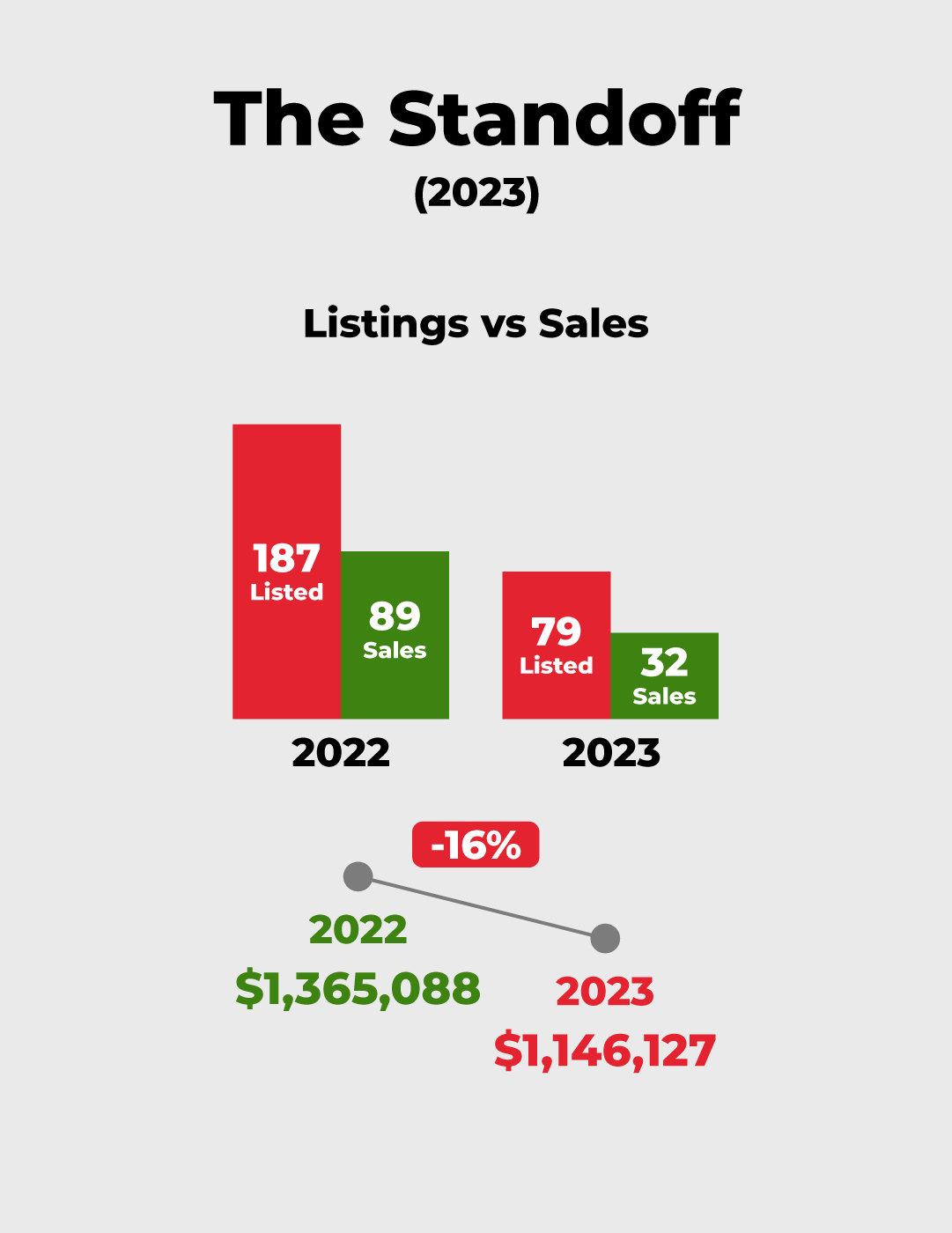
The result wasn’t a crash — it was a stalemate:
Listings dropped
Sales dropped
Buyers refused 2022 pricing
Sellers refused 2023 offers
Everyone just sat and watched each other.
The reset didn’t happen when rates went up — it happened when a lot of the 2020–2022 buyers decided to test the market.
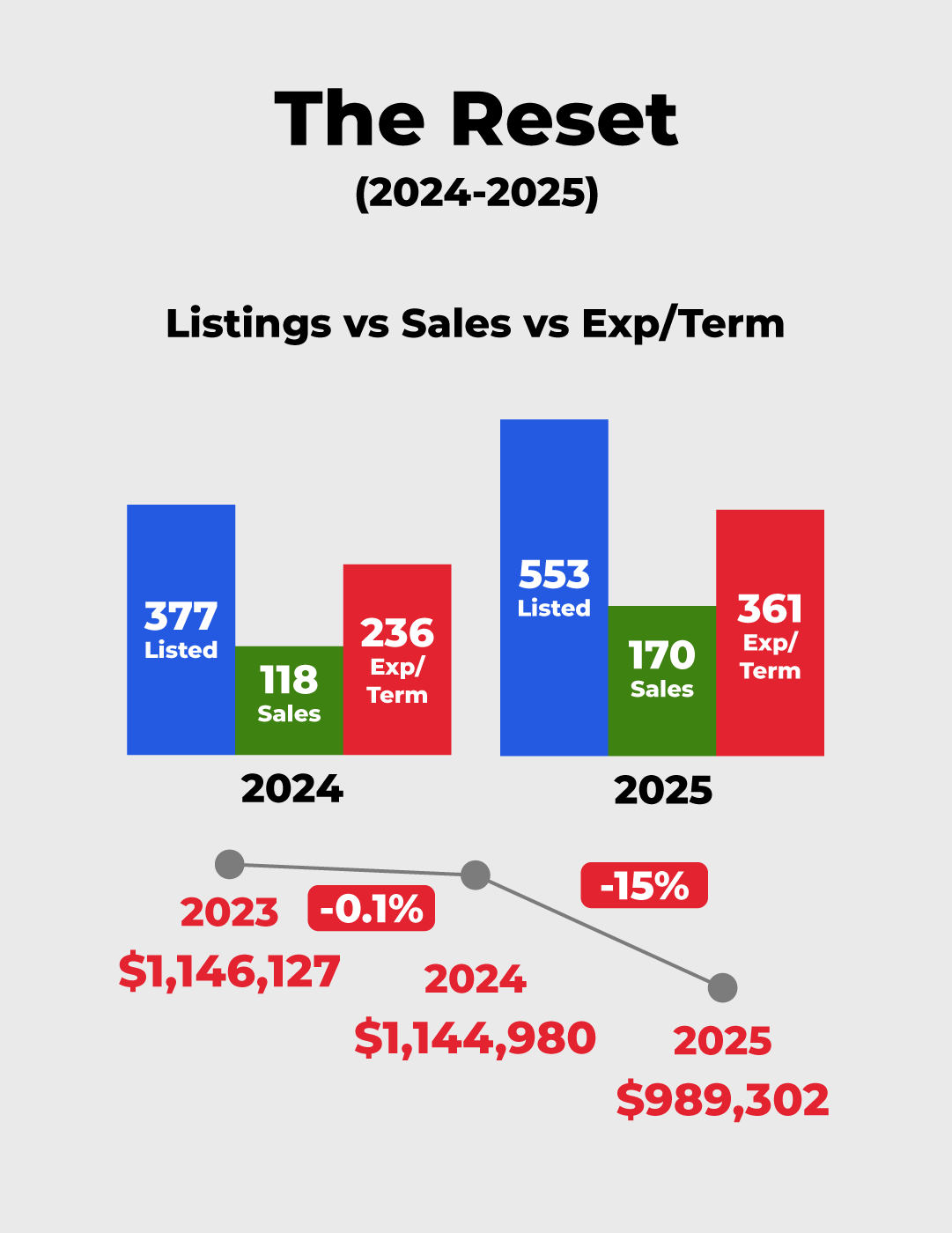
Listings exploded:
2023: 79 total listings
2024: 377 total listings
2025: 553 total listings
And it wasn’t just listings. Expired + terminated numbers ballooned because a huge portion of those properties were priced like it was still 2022.
Once pricing finally adjusted, buyers came back in and sales picked up again. By 2025, the average sale price had pulled back to just under $990K, which is about a 27% decline from the peak.
That was the first real price discovery we’d seen since COVID.
The part that most people — including the media — are still missing is the 5-year fixed mortgage lag built into this market.
Here’s how the renewal math lines up:
2020 purchases → renew in 2025
2021 purchases → renew in 2026
2022 purchases → renew in 2027
A lot of the cottages bought during the surge were financed at historically low rates. Renewal is where carrying costs finally reprice to current reality.
This doesn’t mean a crash is coming. It does mean the next couple years will be a sorting phase:
properties with strong end-user value will hold up
properties that depended on STR math will need to be repriced
seasonal cottages will adjust differently than year-round homes
If you’re watching the market closely, you’ll already see the early signs of this playing out.
If you’re watching a specific lake or river, you can get notified when new waterfront data or updated reports are released. No spam — just occasional, relevant market insights and listing updates.
If there’s one lesson from the last five years, it’s this:
Waterfront is not one market. It’s four, at minimum.
Here’s how I break it down in practice:
1. Prime Year-Round Waterfront
Strong buyer pool
Relatively price-inelastic
Tends to hold up well even in resets
2. Seasonal Cottages
Highly discretionary
Pricing sensitive to rates + renewal + upgrades
More supply coming as boomers age out
3. STR-Driven Properties
Valuation tied to yield
Renewal risk most pronounced here
Pricing must match revenue reality, not 2022 optimism
4. Marginal/Compromised Frontage
Longer DOM
Buyers cherry-pick value
Needs sharper pricing to move
Understanding which lane a property sits in matters more today than it did at any point during the COVID surge.
don’t expect a boom and I don’t expect a crash.
Here’s the more honest outlook:
Prime frontage: stable to slightly firm
Seasonal cottages: mild downward pressure
STR inventory: renewal-driven repricing
Marginal frontage: longer DOM + sharper discounts
In other words:
2026–2027 won’t be about “up or down” — they’ll be about “sort and separate.”
Quality vs. hype. End-user vs. yield. Year-round vs. discretionary.
If you’re considering selling, understanding where your property fits within today’s waterfront market is critical, especially when seasonal and year-round values are behaving very differently.
If you’re buying, having access to accurate pricing guidance and new listings as they come up can make a significant difference.
Call or Text: (705) 879-8200
Email: jasonrichard@royallepage.ca
The information contained in this report has been compiled from data provided by the Central Lakes Association of REALTORS® MLS system. While deemed reliable, it is not guaranteed and is subject to change without notice. Jason Richard and Royal LePage Kawartha Lakes do not assume responsibility for any errors, omissions, or inaccuracies. This report is intended for informational purposes only and should not be relied upon as financial, legal, or investment advice. For the most current market data or a personalized property evaluation, please contact Jason Richard directly.